Archives
- 2026-05
- 2026-04
- 2026-03
- 2026-02
- 2026-01
- 2025-12
- 2025-11
- 2025-10
- 2025-09
- 2025-03
- 2025-02
- 2025-01
- 2024-12
- 2024-11
- 2024-10
- 2024-09
- 2024-08
- 2024-07
- 2024-06
- 2024-05
- 2024-04
- 2024-03
- 2024-02
- 2024-01
- 2023-12
- 2023-11
- 2023-10
- 2023-09
- 2023-08
- 2023-07
- 2023-06
- 2023-05
- 2023-04
- 2023-03
- 2023-02
- 2023-01
- 2022-12
- 2022-11
- 2022-10
- 2022-09
- 2022-08
- 2022-07
- 2022-06
- 2022-05
- 2022-04
- 2022-03
- 2022-02
- 2022-01
- 2021-12
- 2021-11
- 2021-10
- 2021-09
- 2021-08
- 2021-07
- 2021-06
- 2021-05
- 2021-04
- 2021-03
- 2021-02
- 2021-01
- 2020-12
- 2020-11
- 2020-10
- 2020-09
- 2020-08
- 2020-07
- 2020-06
- 2020-05
- 2020-04
- 2020-03
- 2020-02
- 2020-01
- 2019-12
- 2019-11
- 2019-10
- 2019-09
- 2019-08
- 2019-07
- 2019-06
- 2019-05
- 2019-04
- 2018-11
- 2018-10
- 2018-07
-
br Conclusion br Acknowledgements br Introduction Synapses a
2022-12-02
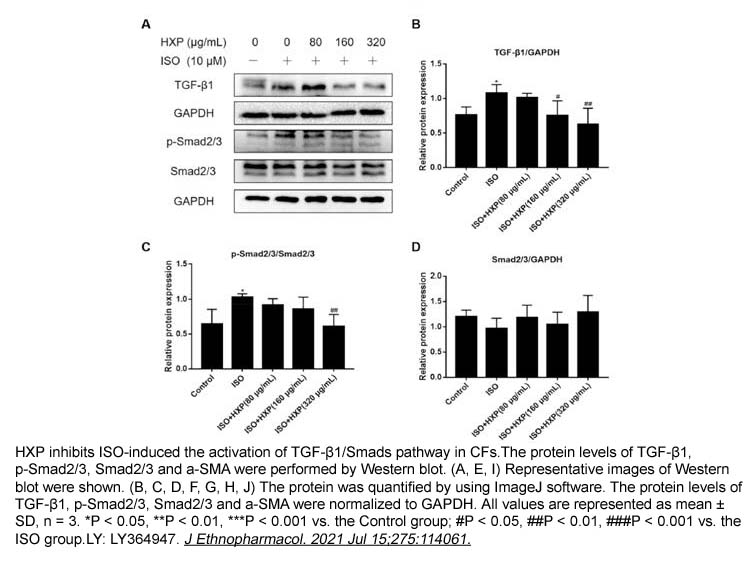
Conclusion Acknowledgements Introduction Synapses are the fundamental elements of neuronal networks that enable the processing, encoding, and retrieval of information in the brain, and pathological disruptions in synapse structure are broadly held to underlie the development of neurological
-
To investigate if WP increased CAT activity in cells C
2022-12-02
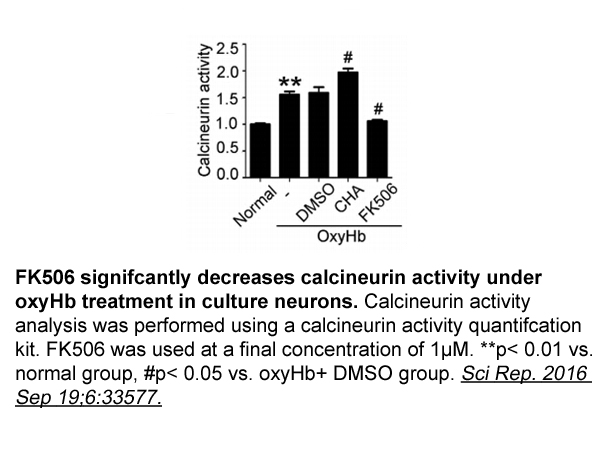
To investigate if WP increased CAT activity in cells, C2C12 muscle V5 Epitope sale were treated with 0.1 to 0.4 mg/mL of WP (80.05% protein) for 24 h and then stressed with 0.75 mM H2O2 for 1 h (Xu et al., 2011). The CAT activity was significantly enhanced from 15.1 ± 0.7 to 23.7 ± 1.3 U/mg of tota
-
br HMG proteins mobile modulators of
2022-12-02

HMG proteins: mobile modulators of chromatin structure and cellular phenotype The term “High Mobility Group” was originally coined for the HMG proteins because of their unusual solubility properties, their small size and their rapid mobility, relative to other chromatin proteins, during gel elect
-
In view of the ubiquitous distribution of the arachidonate S
2022-12-01
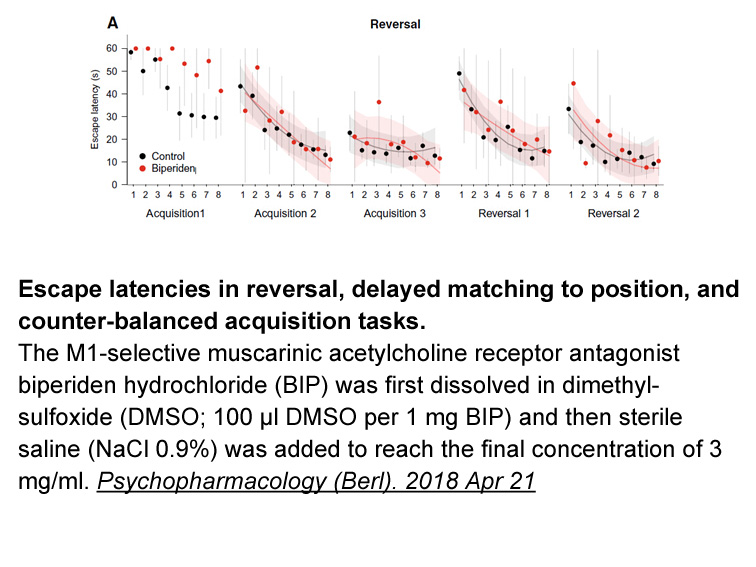
In view of the ubiquitous distribution of the arachidonate 12S-lipoxygenase isoforms and the variety of cellular reactions influenced by the resulting arachidonate metabolites, these products widely play important roles in many biological systems. The development of new type-specific inhibitors of t
-
BRL 37344, sodium salt Glycerol dehydratase GDHt EC is
2022-12-01
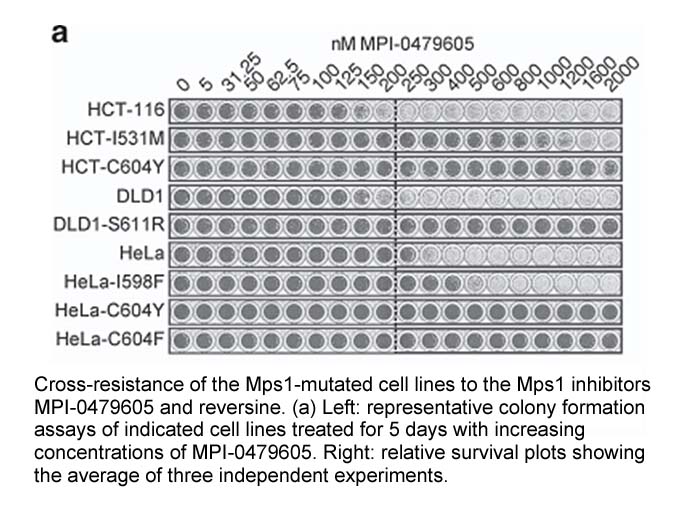
Glycerol dehydratase (GDHt, EC 4.2.1.30) is a key enzyme for the bioconversion of glycerol into the value-added chemicals and thereby has recently attracted a great deal of attention as an essential component for metabolic engineering . GDHt carries out a radical-mediated turnover of glycerol into 3
-
br Endoplasmic reticulum protein ERp binds to AdipoR in HeLa
2022-12-01

Endoplasmic reticulum protein 46 (ERp46) binds to AdipoR1 in HeLa cells ERp46 is localized in the ER and is suggested to act as a chaperone. About 20% of endogenous ERp46 are found at the plasma membrane suggesting that this protein may have additional functions. ERp46 interacts with 5-Carboxymet
-
To assess relative metabolic activity and proliferation
2022-12-01
To assess relative metabolic activity and proliferation of 2-Palmitoylglycerol attached to various substrates we used the MTT assay [29], [30]. In order to compare the metabolic activity of cells under the various conditions irrespective of the number or viability of the cells, we performed a PicoG
-
Ciclopirox ethanolamine receptor B lymphocytes are found in
2022-12-01

B lymphocytes are found in blood, lymph nodes, spleen and tonsil and other mucosal tissues [110]. These cells originate in the bone marrow from a common progenitor shared with T, NK, and some DC subsets [111]. Progenitor Ciclopirox ethanolamine receptor progress through the early stages of maturati
-
As an alternative to chronic receptor blockade
2022-12-01
As an alternative to chronic receptor blockade, we have been targeting adenosine kinase (ADK) – an astrocyte-based enzyme that catalyses the phosphorylation of adenosine, as a means to modify Patchouli alcohol adenosinergic signalling (Boison, 2006, Etherington et al., 2009). Up-regulating ADK faci
-
br Conclusion br Conflicts of interest br Introduction Enzym
2022-12-01
Conclusion Conflicts of interest Introduction Enzymes are widely applied as biocatalysts in fields such as synthetic chemistry [1], pharmaceuticals [2], environmental treatment [3], and food technology [4] because they can catalyze chemical transformations in a highly selective manner under
-
We have previously reported that interfering
2022-12-01
We have previously reported that interfering with Cap Firefly Luciferase synthesis assembly dynamics by knocking down cofilin-1 in hMSCs increased polymerized actin that promoted osteoblast cell differentiation through a mechanism of enhancing focal adhesion kinase (FAK), p38 and c-Jun N-terminal k
-
br Conclusion br Conflicts of Interest Disclosures br Acknow
2022-12-01
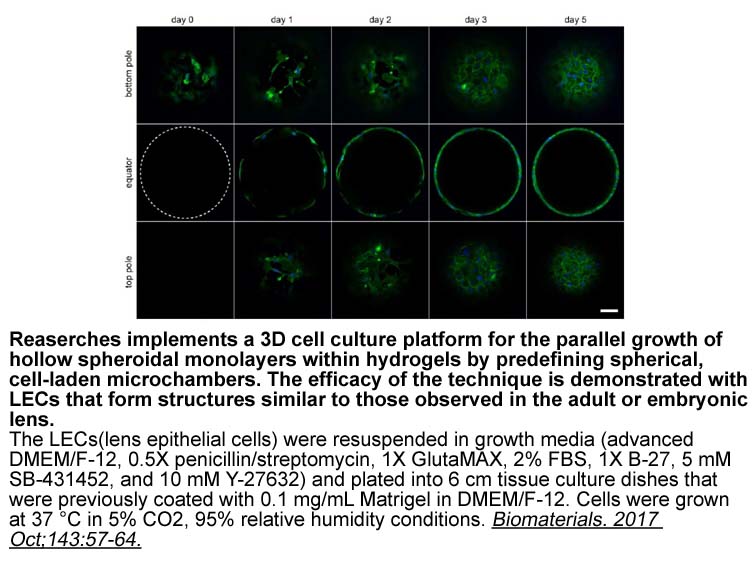
Conclusion Conflicts of Interest/Disclosures Acknowledgement This study was funded by the Ministry of Science of the Republic of Serbia (grant #175083). Introduction Myasthenia gravis (MG) is an antibody-mediated, neuromuscular transmission disorder, where the targets are postsynaptic p
-
Licarbazepine Here we show that the co activation of RTKs an
2022-12-01
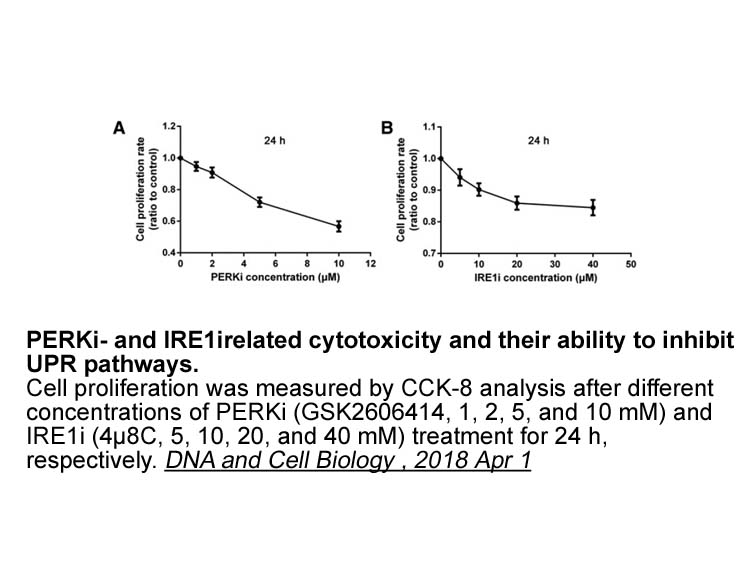
Here, we show that the co-activation of RTKs and non-RTKs is a common trait in treatment-naïve EGFR-mutation-positive NSCLC Licarbazepine and patients, with AXL and CDCP1 being commonly over-expressed. The combination of gefitinib or osimertinib with the Src/FAK/Janus kinase 2 (JAK2) inhibitor TPX-0
-
Receptor tyrosine kinase Axl is
2022-12-01
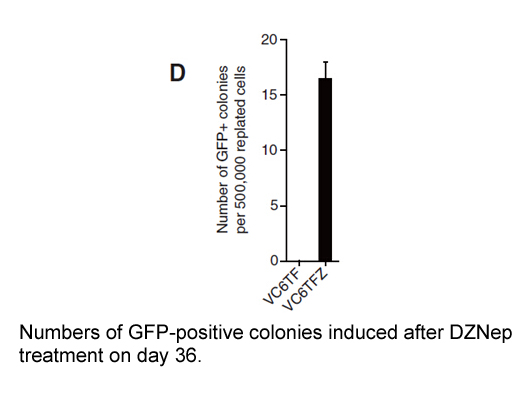
Receptor tyrosine kinase Axl is a member of the TAM (Tyro3/Axl/Mer) family, and has reported been associated with a spectrum of human cancers [8]. Numerous studies have revealed that the oncogenic potential of Axl is attributed to the anti-apoptotic and proliferative signaling pathways triggered by
-
Analysis of ASK crystal structures as
2022-12-01
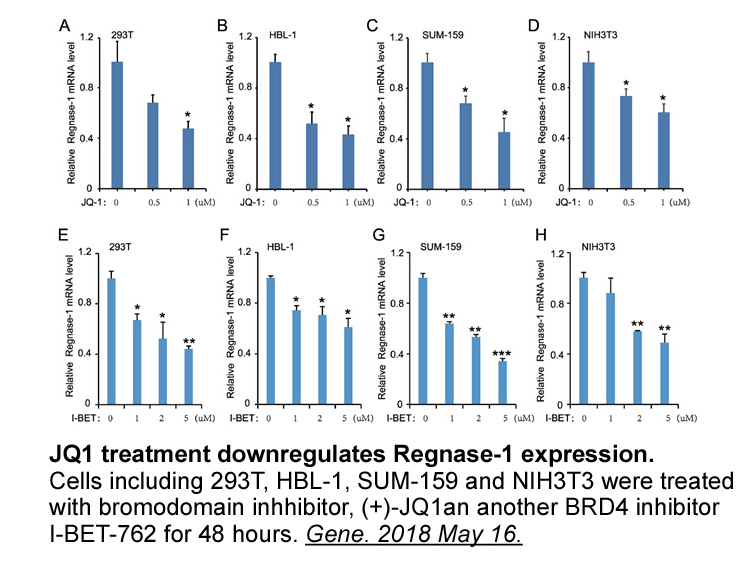
Analysis of ASK1 crystal structures as well as an investigation of how cccp mitochondria receptor 4 might bind were undertaken to understand opportunities for engaging Gln756. To this end a docking model derived from PDB 3VW622 was used to predict the binding mode of amide 4 in the ASK1 active site
16275 records 387/1085 page Previous Next First page 上5页 386387388389390 下5页 Last page